Showing posts with label galls. Show all posts

Sunday, March 20, 2011

Witches Broom - Another Hackberry Gall

Witches Broom on Common Hackberry

This time of year, before the trees leaf-out, it's relatively easy to spot odd growths on trees.   I was driving on Badland Road near Rieck's Lake Park in Alma, Wisconsin today looking at cranes and waterfowl when I spotted this fist-sized knot of twig growth.  At first I thought it might be an abandoned bird nest.

I stopped and got out of the car to get a closer look.  That's when I realized the tree, a Common Hackberry, supported more than a dozen of these strange growths.  That would be way too many nests for one just tree.

Witches Broom on Hackberry

Turns out it's a gall known as witches broom.

Scientists haven't figured out exactly what causes this gall, but they know it occurs when the bud on a tree branch is injured (by winter road salt, a fungus or a bacteria) - or infected by a microscopic mite Eriopes celtis and by a powdery mildew fungus Podosphaera pytoptophila

While scientists don't understand how the mite and fungus interact, they do know that it doesn't "kill" the tree.

Witches broom galls are not unique to hackberries.  They can also be found on oak, cherry, birch, red cedar, alder and spruce.

Mites are not the only animals associated with witches brooms.  In Alaska, Flying Squirrels have been known to create winter hibernating capsules in spruce witches broom.  They chew out cavities of the gall and insulate them with a lining of mosses and feathers, making their winter hide-away snug as a bug in a rug.

Friday, March 18, 2011

What Are the Black Growths on Tree Branches?

Black Knot Gall

Every time I've taken a walk in the woods this winter, I've noticed this distinctive black growth on a number of trees and shrubs.  Today I took a photo to remind me to find out what it is.

It's a gall, caused by a fungus that has two names:   Dibotryon morbosum,  Apiosporina morbosa.  Commonly known as Black Knot disease, it's found only on Prunus species - cherries, plums and apricots.  The presence of this gall is an easy clue to winter identification of these trees.  


In the spring, fungus spores discharged from sacs on the black knots infect new shoots after the buds pop.  The "knots" are visible in the fall and into the second spring.  They turn black during the second winter.

After a year or so, the black knots may also host a whitish pink mold and insects.


 HVSNFV457P3U

Tuesday, October 19, 2010

Why did the Dung Beetle Cross the Trail?

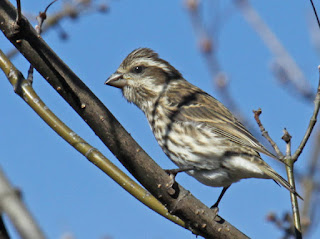
female Purple Finch
When I walk the Chippewa River State Trail, I'm usually looking up - for birds. 

Today the familiar crunch, crunch of my shoes crushing the hackberry nipple galls attached to the now fallen yellow and brown leaves, made me look down.

Hackberry Nipple Galls


That's when I noticed this quarter-sized irridescent beetle scurrying across the trail, disappearing in the leaf litter.


I'm not afraid of beetles, but this one looked like a mini tank, and I wondered about those reddish-orange comb-like antennae.  It was moving too fast for me to photograph it on the ground, so I threw caution to the wind and picked it up.

I've never taken an entomology course, so I was clueless about how to hold one of these creatures safely (for it and me).  As I was working on getting my camera readied - and holding the beetle in the palm of my hand, it flipped upside-down.

phoretic mites on an earth boring beetle
That's when I noticed a dozen or so little transparent creatures clinging to the beetle's chest.  Hm.  What are they?

They weren't eggs.  They were moving round on that chest.
They weren't "baby" beetles.  Beetles go through complete metamorposis from egg to larvae to pupae to adult.
I found the answer later when I uplinked my photos at www.bugguide.com.

They're phoretic mites.  Phoresy is the term used to describe the relationship between two species where one attaches to the other for transportation.   Harmless to the beetle (and me), these arthropods feed on the eggs of the flies attracted to the same food that the beetle eats.  They hitch-hike on beetles to get from meal to meal.

This beetle, one of more than 600 species world-wide in the Geotrupe family, is one of the earth boring beetles.   Male Geotrupes are are known for dragging decaying and moldy leaf litter, fungi and occasionally dung, into their tunnels.  Then they wait for the females to show up.  After copulation, the female lays her eggs on the food the male has provisioned.

So, what was this beetle doing crossing the trail?

Maybe it was checking out the leaf litter or heading to its next meal.

Tuesday, August 3, 2010

Hackberry Galls Revisited

July's hot and humid weather has created the perfect storm for mosquitos.  They're everywhere.  Bzzt.

They're most active at dawn and dusk, so I've modified my schedule.  I head outdoors around mid-day.  It's not the best time to watch wildlife - so I've modified my viewing targets: plants.

Today's plan:  find and photograph galls - what happens to plants when they're "bitten" by insects.

Hackberry Nipple Galls

Galls are distinctive growths in plants caused by parasites (insects, mites, bacteria and fungi).  The parasites actually take control of the growth of plant tissues.

Hackberry Nipple Galls are formed by jumping plant lice (psyllids).  These insects overwinter as adults and mate in the spring.  I first noticed the adults this spring, when one landed on my arm.  (They're harmless).

Females lay eggs on the underside of Hackberry leaves.  When the eggs hatch, the nymphs, feeding on the leaves, cause the leaf tissue to grow galls around them.   The nymphs feed on these tissues through out the summer and then emerge as adults in September.

 Hackberry Nipple Galls in November


I first noticed these galls last November when the Hackberry leaves littered the Chippewa River Trail.
Crunch, crunch.

 Hackberry Nipple Galls in July

The Hackberry leaves I saw today were literally weighted down with these galls.  But they don't harm the tree.   Amazing how that works. 

Hackberry Nipple Galls and a Hackberry Petiole Gall

I spotted another gall associated with Hackberries:  Hackberry Petiole Galls.  Much larger than the Nipple Galls, they're also created by a psyllid.   Petiole galls are multi-chambered with up to a dozen or more nymphs inside.  The psyllids overwinter in these galls as nymphs and emerge as adults in the spring, leaving behind an empty woody husk.

Hackberry Petiole Gall in the winter

Petiole galls are easy to spot during the winter, providing a quick clue for identifying Hackberry trees when their leaves have dropped.

Saturday, April 3, 2010

Hackberry Petiole Gall Psyllid

Pachypsylla venusta (Osten Sacken)

March 15th was one of those unseasonably warm days.  A tiny insect that looked like a cicada (above) was one of hundreds swarming the Chippewa River State Trail.  I didn't get a good look until one landed on my thumb.  It looked like it could suck the guts out of me.  (It didn't).


I had no idea what it might be until today, when I took a photo of this hackberry sapling full of dried galls.  I wanted to see what the insect that made it looks like.  That's how I discovered the identity of my March 15 mystery creature:  the hackberry petiole gall psyllid (also known as jumping plant lice - they suck sap from leaves and stems).   This psyllid species forms woody galls on leaf petioles. 


Infested leaves do not fall from the trees and heavily infested trees are recognizable during the winter by the presence of the dead leaves. The adults emerge in the spring after the nymph cuta its way out of the woody gall.   While they apparently do not harm the hackberry trees, these old galls can remain on the trees for years.

Tuesday, November 3, 2009

Crunch, Crunch: Hackberry Galls


It was the noise that drew my attention to these odd corn-shaped growths on the downed leaves along the side of the Chippewa River State Trail this afternoon.  The crunch, crunch, crunch.  I had to stop to see what the crunch was all about.

There were literally thousands of them attached to the dried up and brown leaves that littered the macadam.  What were they?  Not maple, ash, elm or cottonwood.

I looked around at the naked trees.  Only the oaks were still holding on to their leaves.  Botanists have a word for this:  marcescent (leaves that wither but don't fall off).   Definitely not an oak.  But what?

Then I noticed that tree with the odd bark.  I looked up at the branches, and there it was:  a lone, brown leaf with the dried "corns," spinning in the breeze.   A Hackberry tree.

What was the crunchy corn stuff?

I guessed it was a "gall."  I googled "Hackberry" and "leaf gall."  The internet coughed up several pages of links.   

I went to the "Rutgers - the State University of NJ - Agricultural Extension" web page and there it was:  the Hackberry Nipple Gall, one of 10 types of gall-making insects that attack Hackberry foliage.   

Curious, I went to one of the US Forest Service pages and learned that parasites of the insects that make these galls actually eat the galls after they eat the insects that originally created the galls.  The insects, called "psyllids," look like miniature cicadias (4mm or 1/8 inch).  

They emerge as adults in September, and over-winter in the cracks and crevices of tree bark.  The adults have an interesting nickname:  jumping plant lice.  They're considered a nuisance when they emerge in huge numbers.  (They get on cars, in buildings, etc.)  


I don't have any Hackberries nearby - but I know the feeling, the nuisance, annoyance, etc of  Asian ladybug beetles and box elder bugs.

Most of the Extension experts concur - if the Hackberry in your yard is "infested" with nipple galls, there's no need to spray.  These psyllids may look bad, but they do not damage trees.

Tuesday, October 13, 2009

Willow Pine Cones


What's a pine cone doing on a willow?

It's not really a pine cone.

It's a gall, an abnormal cell growth caused by chemicals either injected or secreted by an insect or mite, a nematode or disease agent usually during a period of rapid plant growth (late spring).  These chemicals cause increased production of normal plant growth hormones which result in hypertrophy (increased cell size) and/or hyperplasia (an increased number of cells).  When the gallmaker is an insect, the gall provides food and shelter for the developing offspring.

Galls are unique to the plant and the gall-maker.

Several distinctive galls can be found on willows:  the willow blister gall, the fleshy willow leaf gall and the willow beaked gall.

In this case, the gall maker is a tiny dipteran - a midge known as Rhabdophaga strobiloides.  She lays a single egg in the terminal buds of willows.  When the egg hatches, the bud stops growing its typical leave.  Instead, the growth of flatten scales looks like a pine cone.  The larvae (maggot) over-winters in the gall and emerges as an adult in the spring.

An interesting aside about the entomologist who named this species,  Baron Karl Robert von Osten-Sacken.   A Russian diplomat living in the United States during the Civil War, Osten-Sacken published many papers on Diptera and was known for his work on insect galls.